


For me, the computer has always been there. I saved up my first 4,500 kroner and bought my first laptop. It went straight into Sims 2 and Minecraft, of course. That interest pulled me further into the world of computers: I wanted to run a Minecraft server that other people could play on! I was looking into that at barely 12, and at 13 I wanted to make my own games (that career was short and painful, hehe). But it made me extremely interested in programming and coding, and I kept at it.
The inventor
Hukeplan.com (sadly offline now)
In lower secondary school I was the inventor. Among other things I built a digital weekly timetable, because I thought looking at the paper one was completely unnecessary. It was a huge success, right up until I missed that the paper timetable had swapped some lessons around, and I turned up for PE at 8 o'clock on a cold winter morning with nobody else there. (We were in temporary classrooms, so it was extra silly, since the gym was 6 km from the school.) That was just the first time I hacked something together. Because the definition of hacking is:
The original definition of hacking is that someone uses tools, technology and knowledge in new and highly innovative ways to solve problems and challenges, often motivated more by the challenge itself than by the gain from solving it. Many communities still use that definition today. Someone who hacks is called a hacker. Being hacked, on the other hand, is mostly synonymous with computer attacks and cybercrime.
From hacker to intruder
«Datasnok», roughly «computer intruder», is the more accurate Norwegian term for what most people picture as a «hacker». But how did I go from the digital timetable to finding flaws at Domino's, Vipps, Skatteetaten and others?
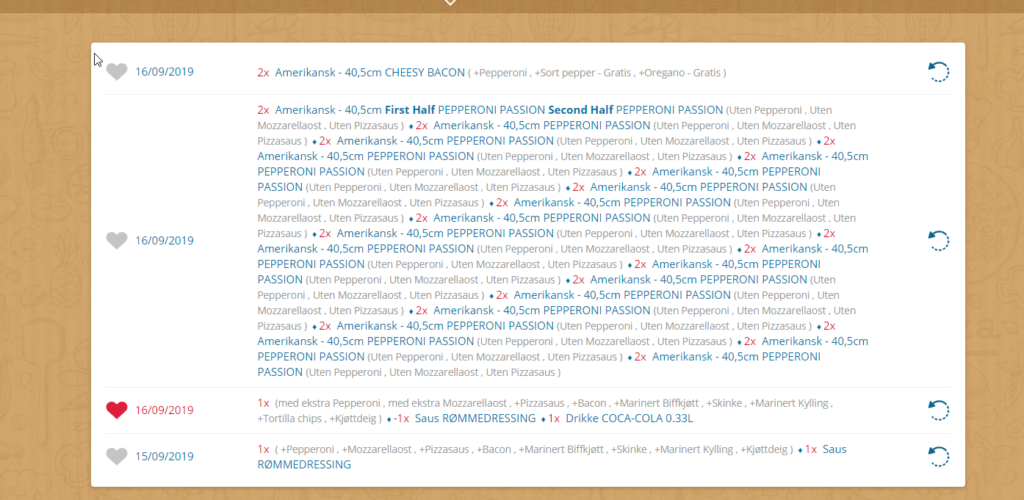
Domino's Pizza with «a few» bugs (they were fixed quickly).
What turned me into an intruder is a bit more interesting. I started using what I had learned from building websites to my own advantage (this was quite a few sites after the timetable). I found it great fun to discover ways of running code or getting past validation. I found plenty of resources on Google that helped me learn new tools, such as Burp and Kali Linux. I tested a lot on my own websites, but also on other Norwegian sites. When I found my first bug in a production environment, I found it a bit hard to word the report. It felt a little like saying: «Hi! I broke in, but I left without touching anything.» It really took off with Domino's Pizza, where I found bug after bug. It was after those findings that I realised I wanted to go all in on security. Even more motivating was when Digi published an article about the security flaws I had found in Norwegian web shops. What I was starting to realise was that Norway really is short of security people!